
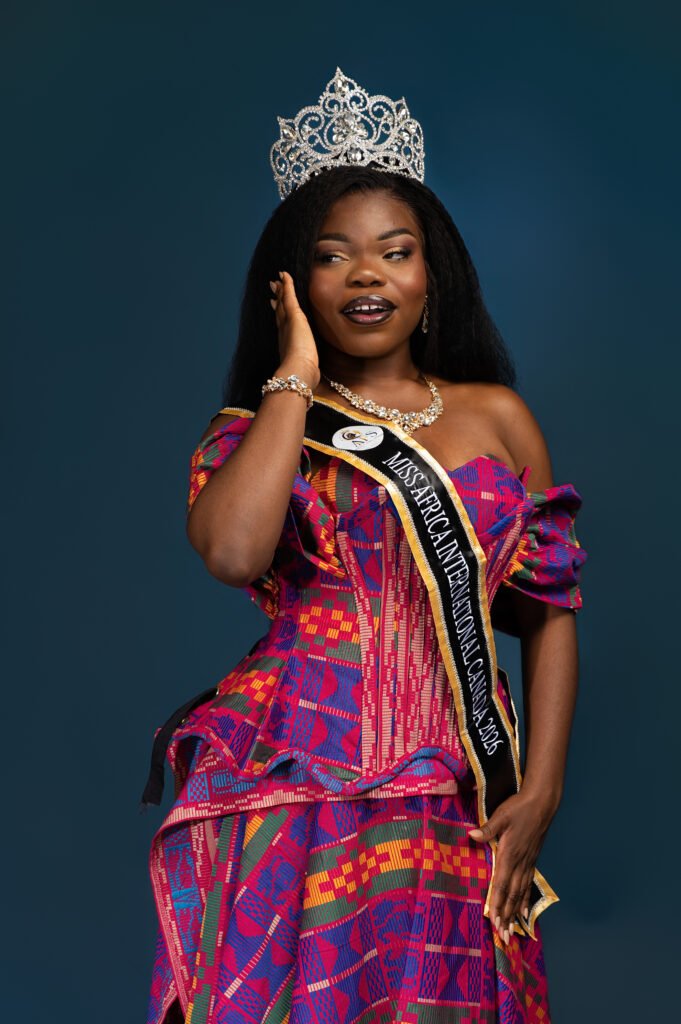
Some women wear a crown, while others use it as a platform to champion something greater than themselves. Oghenerukevwe Erifeta, Miss Africa International, embodies the intersection of beauty, ambition, cultural pride, and purpose. A Nigerian-born woman now based in Canada, her journey has taken her from the pursuit of education to the world of fashion and modeling, while nurturing a commitment to accessible education, women’s rights, community service, and diverse representation.
With modeling appearances across fashion showcases and magazine features, she continues to navigate spaces where identity and representation matter. Through her moniker, Ms.yangah, she proudly celebrates her African roots and carries her heritage with confidence.
In this exclusive Fourwall Magazine interview, we explore the journey behind the crown — the experiences that shaped her, the values that guide her, and the vision that inspires her next chapter. This is more than a story about becoming a queen. It is a story about becoming a woman who understands the power of her voice, the beauty of her identity, and the responsibility that comes with influence.
Before the crown, the modeling career and the achievements, who is Oghenerukevwe Erifeta? Take us back to your childhood and the experiences that shaped the woman you are today.
I am the eldest of four children, so I learned the responsibility of leadership and the power of speaking up quite early. Growing up, whenever my younger siblings did something wrong, my dad would always tell me, “You’re their elder sister. You should have said something, spoken up, stopped them.” That taught me something that has stayed with me throughout my life: you may not be responsible for other people’s actions, but you can always choose to speak up rather than stand by passively. And there is power in that choice.
Looking back at the young woman who arrived in Canada seven years ago, what would you say has changed the most about you?
For the most part, I have stayed the same at heart. I arrived in Canada with so much passion and a desire to make an impact, both in the community around me here in Canada and back home in Nigeria. From community service and supporting students, particularly international students immigrating from Nigeria, to finally completing my education, I have learned that making the impact I dream of requires far more work, sacrifice, and struggle than I initially imagined.
In my heart, I am still that same girl. But little me lived on very grandiose dreams, whereas the woman I am today walks her path with a more measured approach. Experience and the realities of life have taught me a great deal. The dreams haven’t become smaller. I’ve simply developed a deeper understanding of what it takes to achieve them.
What inspired those choices, and what important lessons have your educational experiences taught you?
Don’t give up. It is one of the greatest lessons my educational journey has taught me. There were many moments when everything felt extremely overwhelming. Any immigrant can tell you that the experience can be incredibly isolating. But in founding the Nigerian Students’ Association at my university, we built a community that made the journey a little more bearable.
And then, you take it one day at a time, one step at a time, one phone call back home to my Mum—breaking down and getting pulled back up—at a time. Somehow, here I am, with four degrees to show for it. I have immense gratitude for the journey, but more importantly, it has strengthened my belief that no matter how difficult a situation becomes, I have the capacity to make it through, just as I have before.
What first inspired you to speak up for accessible education, women’s rights and communities in need?
Ubuntu is an African philosophy, particularly associated with Southern Africa, that teaches, *“I am because we are.”*
It is the understanding that the pain or success experienced by one person affects the collective. This philosophy is at the heart of all my advocacy. When members of our society are marginalized, it diminishes the quality of life we can collectively experience.
Those are brilliant minds left untapped, opportunities for collective growth left unexplored, and contributions to humanity that may never be realized. I believe ensuring that this does not happen is a responsibility we all share.
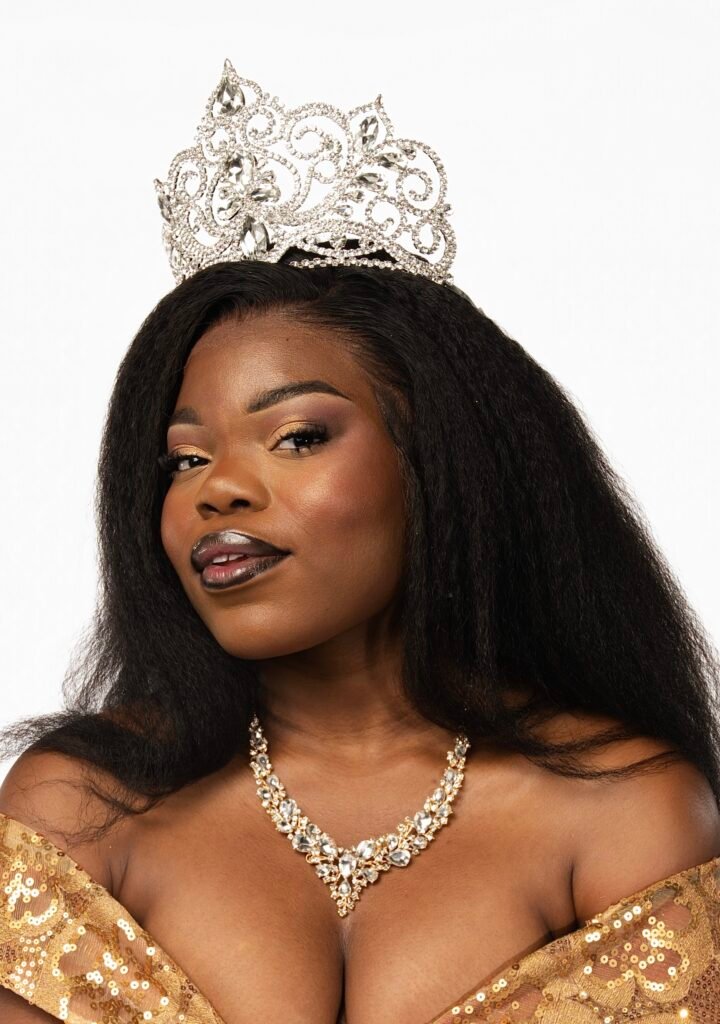
You have built an impressive modeling career. What first drew you to modeling, and what has the industry taught you about confidence and resilience?
“Passion for fashion,” as the Bratz would say! Or perhaps it’s simply the innate *YANGAH* I like to say I possess. I love the glamour, but even more than that, I love the collaboration and creative brilliance that bring fashion to life. From the photographers and designers to the creative directors and models, it’s almost like a dance between creative minds, and I truly appreciate the artistry of it all.
Whether I’m bringing my own creative project to life, having the opportunity to don a designer’s beautifully crafted piece, or embody a photographer’s editorial vision, there is something incredibly fulfilling about being part of the entire creative process.
The modeling industry can sometimes place enormous pressure on women to fit a particular image. What have you learned about confidence, beauty and individuality through your modeling journey?
Unfortunately, it does, and I have always been vocal about challenging that. I believe modeling is a skill. Walking, posing, and understanding how to communicate through movement and expression require dedication, practice, and investment in one’s craft. But outside of those skills, beauty exists in every race, body type, and culture. Unfortunately, the industry has not fully embraced that reality, and many women are still not taught to recognize it within themselves.
I have learned that we must stand confidently in our own beauty and own it unapologetically. I have been inspired by women who do exactly that, and I hope to inspire others in the same way. Beauty standards are largely shaped by societal biases, including racial and patriarchal influences. Through advocacy, representation, and our own self-confidence, we have the power to challenge and reshape those standards.
Have you ever experienced a moment when your African identity became a barrier in the fashion or modeling space? If so, how did you respond?
Personally, I cannot say I have experienced a direct instance of discrimination in the industry because of my African identity.
However, growing up, the limited representation of women with Afro-textured hair and darker skin as symbols of beauty certainly influenced how I perceived myself. I grew up in postcolonial Nigeria, where Eurocentric beauty ideals, colourism, and what we you can call *Oyibo idolization* were unavoidable themes left off from the colonial era.
I remember seeing girls bleaching their skin or chemically straightening their hair, while music videos frequently featured lighter-skinned or mixed-race women as the standard of beauty. Even without anyone explicitly telling me I wasn’t beautiful, the absence of women who looked like me in those spaces raised questions about my own beauty and what society considered desirable.
Thankfully, there were people who challenged those narratives. I remember 2Face’s “African Queen”, and beautiful, dark-skinned Nollywood actresses like Ini Edo and Mercy Johnson, who represented a different narrative of African beauty. They inspired me to do the same. I made a conscious decision to reject beauty standards that rejected me and instead champion those that celebrated women who looked like me, through the brands I support, the media I engage with, and the representation I advocate for.
What made you decide that it was time to move from modeling and advocacy into the world of pageantry?
I had always wanted to explore pageantry, but between busy working schedules and pursuing my education, I never quite had the opportunity. After completing school, the timing finally felt right. Pageantry presents an opportunity to bring together everything I love about modeling while using my voice and platform to champion community service and advocacy.
For me, it truly is the best of both worlds.
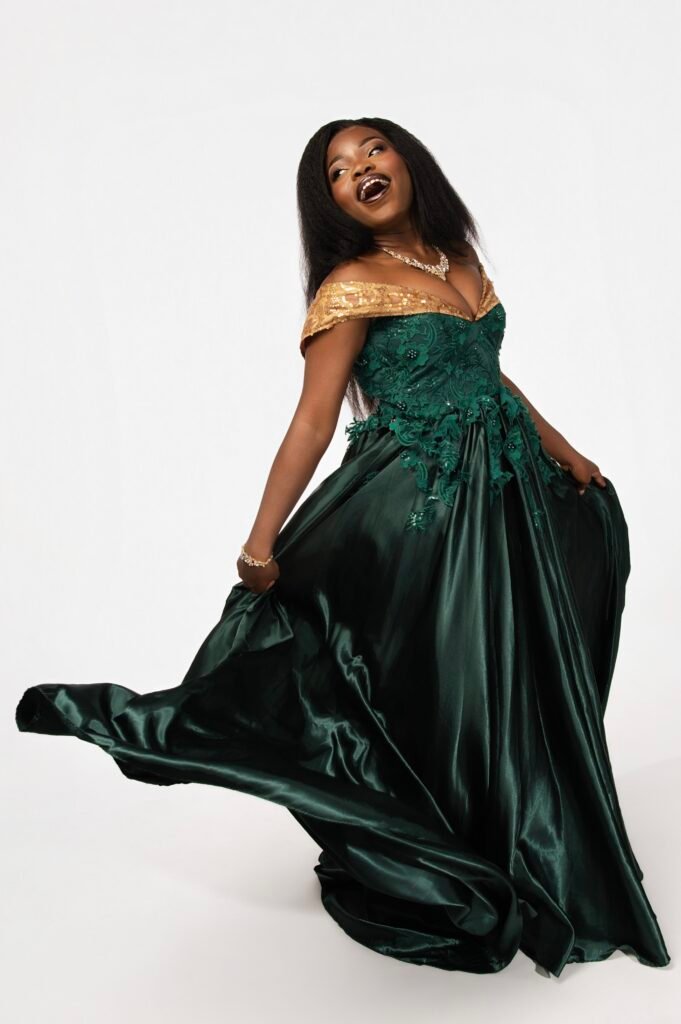
Take us back to the moment your name was announced as Miss Africa International Canada 2026. What was the first thought that crossed your mind?
Mine was an appointment so it was receiving the call with the news. Information about an opportunity to participate in Miss Africa International came shortly after coming off the Miss International Canada stage and it immediately felt like alignment, or perhaps even redirection. Through out my pageant and beauty experience people had referred to me as “African Queen”.
When my national organization contacted me to confirm that I would indeed be crowned and sent to represent Canada at Miss Africa International in Nigeria, I spent very little time taking it all in before immediately springing into preparation. Walking practice, sourcing designers, media engagements, sponsorship outreach, and everything in between! I think that speaks to how seriously I take the responsibility and how ready I was to embrace the opportunity.
What did winning the crown mean to you personally beyond the title itself?
Responsibility. The representation I didn’t always see growing up is now something I have the opportunity, and responsibility, to provide for others. Many young girls of African descent have reached out to tell me how much my journey inspires them. Simply being present in these rooms, taking up space, and pursuing opportunities that may once have seemed inaccessible can show another girl that she can do the same. That is something I carry with great care.
Beyond representation, I see this platform as an opportunity to remain committed to my promises of community service and advocacy. Even through this interview, I hope to bring greater awareness to the issues and causes that matter deeply to me.
What was the most difficult part of preparing for the competition that people watching from the outside would never have seen?
Garnering community support. I have been putting myself out there for quite some time, and people sometimes assume it comes naturally to me. But the truth is, every time I have to speak publicly about my platform, share a video, make a post, or walk into a sponsorship proposal meeting, it can be incredibly nerve-racking.
Nevertheless, I have a very strong belief in my why. I know that what I am working toward is much bigger than me, and that conviction has consistently been stronger than my fear.
What is one achievement in your life that you are particularly proud of that has nothing to do with modeling or pageantry?
I hold the little moments very close to my heart so every time I have the opportunity to make someone’s day a little easier or better, it genuinely means a lot to me. But if I were to name a bigger achievement, it would be completing my undergraduate degrees. Not necessarily because of the certificates themselves, as I do not believe anyone’s worth is tied to their academic qualifications, but because of the person I became in the process of earning them. The tenacity, resilience, and grit I discovered within myself throughout that journey are what I am most proud of.
A crown comes with responsibility. What does being Miss Africa International Canada 2026 mean to you, and what do you want your reign to accomplish?
I believe Africa possesses an extraordinary wealth of resources, human capital, creativity, and brilliance to contribute to the world. Unfortunately, not only are many of these contributions limited by systemic barriers, but much of what Africa already contributes to the world remains inadequately recognized and compensated.
I want to champion that recognition and celebration of African excellence and advocate for the value of our contributions to be acknowledged and rewarded proportionately. We deserve to be celebrated and proportionally compensated for the magnitude of contribution we bring to this world.
I also want to use my platform to advocate against the barriers that continue to restrict our potential, including neocolonialism, exploitation, and corruption. Ultimately, I want my reign to contribute to a narrative in which African excellence is not merely acknowledged but genuinely valued.
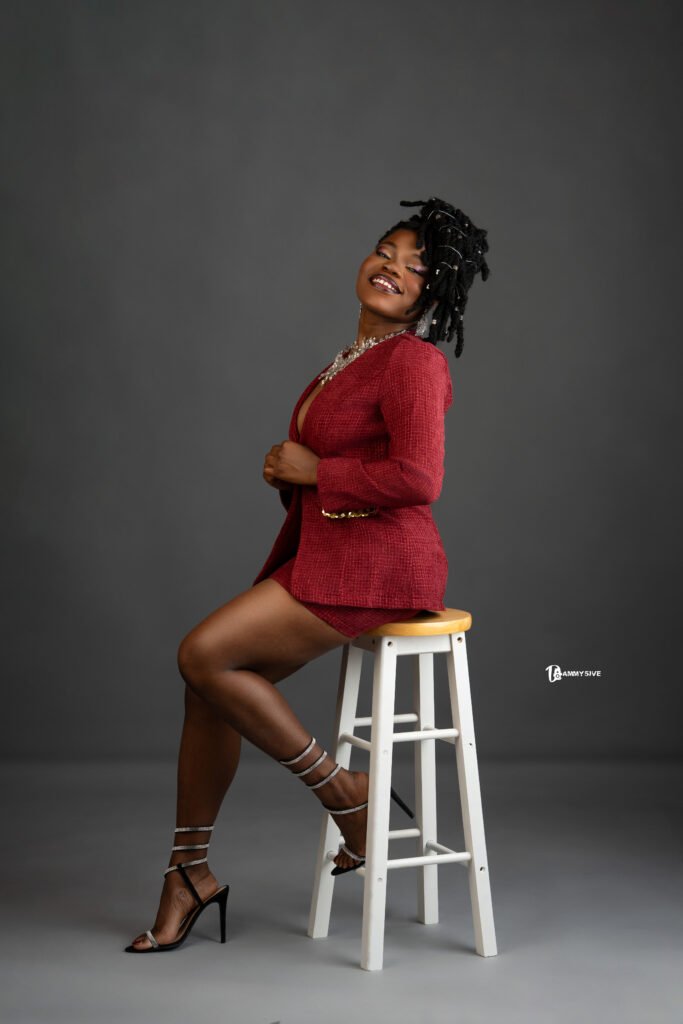
Every successful journey has moments of doubt, rejection and difficulty. What has been your biggest challenge so far, and what did it teach you about yourself?
Not placing at Miss International Canada was certainly a difficult experience as it is not a result any pageant girl hopes for, especially when everyone around you keeps reiterating how much effort they saw you put into the competition. I know those words were meant to be comforting, and I appreciated that my hard work was recognized. But at the time, it was difficult to reconcile that recognition with a result that didn’t reflect what I had hoped for.
Looking back, however, that experience was a masterclass in personal growth, confidence, and perseverance. Pageant schedules are incredibly demanding, and the preparation leading up to the competition is intense. It often feels like a sink-or-swim situation. But I swam so much that I eventually started to enjoy the feel of the water. That experience prepared me for the crown I wear today in more ways than I could have imagined. It also taught me to appreciate the many ways a queen can exist. Every single woman who shared that stage with me was a queen in her own right, including the eventual winner.
A crown may recognize one woman, but it does not diminish the excellence of the others.
If you could speak to the young Nigerian/African girl who dreams of studying abroad, becoming a model, entering pageantry or simply becoming more confident in herself, what would you tell her?
Dream huge, and take it one step at a time.
Don’t let your current reality dictate the size of your dreams, but don’t let the magnitude of those dreams paralyze you from taking the small, actionable steps you can take today. Whether that means volunteering in your community, watching pageant walking tutorials on YouTube, creating content and putting yourself out there, or entering a local pageant, start somewhere. You do not have to have everything figured out before you begin.
There are rooms being prepared for you that you don’t even know exist yet. So keep going. Every little step is part of the journey.
Finally, if this chapter of your life is titled “BECOMING HER,” who is Oghenerukevwe becoming—and what legacy do you hope to leave beyond the crown?
She is becoming the best version of a queen she can be. I am continuously refining my values, strengthening my self-confidence and resolve, and allowing every experience along this journey to teach me the lessons it was meant to teach me before it passes. I am learning to embrace both the beauty and the difficulty of becoming, understanding that growth is not always comfortable, but it is always meaningful.
And beyond the crown, I hope my legacy is one of impact, of having used whatever opportunities and platforms I was given to make life a little better for others. Because ultimately, becoming her is not just about the woman I am growing into, but also about what that woman can contribute to the world.
And doing it all with yangah of course; unapologetic authenticity and confidence.